
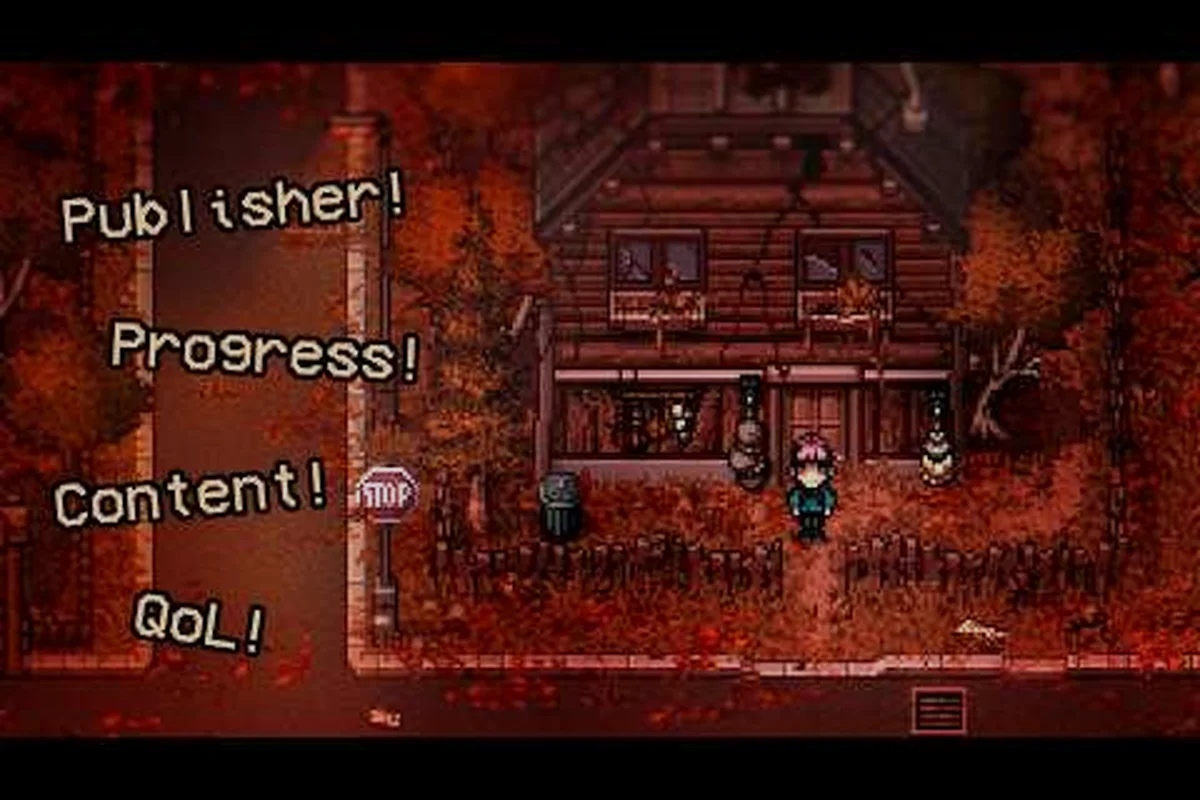
The Welcome to Elderfield fan art competition has become the heartbeat of a small but devoted community, and digging into it pulls you straight into the town's strangest corners. Every submitted sketch, every shared theory, and every dissected line of hidden dialogue reveals how deeply players are connecting with this cozy horror life sim genre standout. Whether you came for the manga-style visuals or the creeping cosmic dread, the community side of the game is where Elderfield's story keeps growing long after the credits roll.
Why the Fan Art Competition Matters for Welcome to Elderfield Lore
The Welcome to Elderfield fan art competition is more than a casual creative event; it functions as a real-time archive of how players interpret the game's symbolism, and the submissions consistently surface details the developers never explicitly explained. According to Welcome to Elderfield on Steam, the title weaves psychological dread into daily farm routines, and the art community has been the loudest voice decoding that tension. Every entry pushes the conversation further, and the patterns that emerge tell you what the playerbase sees as the heart of the experience.
How Submissions Map to Core Game Themes
| Submission Archetype | Typical Subject | Why It Resonates |
|---|---|---|
| Sleep Paralysis Vignettes | The protagonist frozen in bed with shadowy entities | Captures the unique tension at the core of the horror life sim blend |
| Town Founder Portraits | Reimagined versions of the colonial settlers | Lets players visualize lore figures only mentioned in town archives |
| Old Gods Impressions | Loose, Lovecraftian-style cosmic entities | Reflects the unresolved ending tension players feel most strongly |
| Daily Routine Interiors | Kitchen and farmhouse scenes with a wrong detail | Mirrors the cozy horror mood of familiar spaces made uncanny |
| Manga Panel Sequences | Sequential art mimicking horror manga spreads | Directly references the visual style confirmed on the official Steam news |
The Role of Community Spotlight Posts
Steam News drops and developer-curated spotlights amplify standout pieces, and players have noticed that these spotlights often hint at lore that mainstream guides have not picked up yet. A character redesign that emphasizes a scar on the founder's cheek, for example, lined up months later with a dialogue update referencing the same scar. The Welcome to Elderfield fan art competition therefore operates as a kind of indirect communication channel between creators and the developers, and watching the patterns across cycles gives you an edge in understanding what the studio considers canon versus fan embellishment.
Hidden Dialogue and Easter Eggs the Community Has Uncovered
Welcome to Elderfield hides more in its text than its visuals suggest, and the Welcome to Elderfield easter eggs that have surfaced in community breakdowns are the strongest evidence yet that the writers left deliberate breadcrumbs throughout the script. The community has compiled dozens of these into shared documents, and a handful have changed how players interpret the overarching story. For deeper context on the larger narrative structure, the Welcome to Elderfield lore guide walks through how these fragments connect to the Old Gods mythology.
Dialogue Triggers Most Players Miss
Several NPC exchanges only fire under specific conditions: time of day, in-game affection thresholds, or item possession. Players have logged these triggers on Steam Discussions, and the most cited ones fall into predictable categories. The Welcome to Elderfield hidden dialogue discoveries are not random; they cluster around the moments in the daily routine when your guard is most likely to drop.
| Trigger Condition | NPC | What Gets Revealed |
|---|---|---|
| Talk to the librarian between 2:00 and 3:00 AM | Maren the Archivist | A reference to the town founders' original surname before it was changed |
| Gift a wilted bouquet to the blacksmith | Holt | A one-line confession about seeing something in the well as a child |
| Complete the tax payment two days early | Town Hall Clerk | Unlocks a new portrait on the wall behind the counter |
| Fish in the deep pond during a sleep paralysis event | The Fisherman | Dialogue referencing "the third seal" with no prior mention |
| Read the same book twice in one day | Maren the Archivist | A footnote appears describing a sound the founders heard underground |
Visual Easter Eggs Buried in the Environment
The Welcome to Elderfield easter eggs extend well past dialogue, and environment designers appear to have left a layer of symbolism in plain sight. A cracked mirror in the upstairs hallway reflects a room layout that does not match the actual upstairs, a recurring numerical pattern carved into the porch railing of every house matches the date of the in-game town founding, and the crops in your field grow in shapes that match constellations if viewed from the right angle during the horror life sim sleep sequences. None of these were officially explained, and the community treats each as a deliberate clue.
Connecting Easter Eggs to the Old Gods Mythology
A running theory, supported by Steam Discussion threads and YouTube breakdown videos, suggests that the easter eggs form a parallel timeline. While the playable storyline follows a linear path toward the slumbering entities, the hidden content hints at a version of the town where the Old Gods already woke. Reading these together with the Welcome to Elderfield soundtrack by Dated profile, where the lofi vinyl crackle is layered with reversed piano chords, reinforces the sense that the audio team is hiding the same message in a different medium.
Community Theories That Shape How Welcome to Elderfield Is Played
The Welcome to Elderfield community theories have grown into a parallel body of work that rivals the official wiki in scope, and several of them have already changed how new players approach their first run. Some theories are pure speculation, but others have enough corroborating evidence that veteran players treat them as soft canon when planning builds, dialogue choices, and exploration routes.
The Five Most Cited Theories
The community has narrowed the field down to a handful of theories that show up across almost every Discord thread, Reddit post, and YouTube commentary. The table below compares them, with each theory rated on how much in-game evidence currently backs it up.
| Theory Name | Core Claim | Evidence Level | Player Impact |
|---|---|---|---|
| The Third Founder | A third settler, never named in-game, founded the town alongside the two known figures | Strong — referenced in hidden book text and town hall records | Encourages reading every archive before the end of Act 2 |
| The Dreamer Hypothesis | The protagonist is not awake at any point in the story; the entire game is one long sleep paralysis episode | Medium — supported by recurring visual motifs and the difficulty settings guide describing the Old Gods mode transition | Inspires players to inspect surreal room details |
| The Loan Paradox | The town's tax system is the mechanism the Old Gods use to track human behavior | Strong — backed by the timing of tax deadlines and dialogue shifts | Players now optimize payment timing for narrative advantage |
| The Mirror Town | A second version of Elderfield exists behind every reflective surface | Medium — mirrors never match their surroundings, and the soundtrack reverses during mirror events | Prompts thorough investigation of looking glasses |
| The Post-Game Continuation | The "true" ending is unlocked only after the credits, and the art competition teaser art points to it | Weak but growing — fan art submissions since 2025 have included recurring symbols | Generates active community theory discussions |
How Theories Influence First-Time Playthroughs
New players increasingly check the theory threads before starting, and this has changed the way they interact with the town's systems. The Loan Paradox theory, for instance, has led to a community-built practice of paying taxes on odd-numbered days to see if dialogue changes, and several players have reported unique responses that were not documented elsewhere. Similarly, the Dreamer Hypothesis has inspired save-scumming strategies around sleep events, and the Welcome to Elderfield deep forest exploration routes that players take now factor in the Third Founder theory when deciding which shortcuts to unlock first.
What Makes Welcome to Elderfield Stand Out Among Cozy Horror Life Sim Games
Players often search for cozy horror games like Welcome to Elderfield once they finish their first run, and the comparison chart below shows why Elderfield is hard to replicate. The blend of farming routines, sleep-based horror events, and a layered mystery narrative hits a narrow sweet spot that few titles in the Welcome to Elderfield horror life sim genre even attempt.
Feature Comparison With Similar Titles
The table below compares Welcome to Elderfield against its closest neighbors in the cozy horror space, drawing on community comparisons and Steam store descriptions.
| Feature | Welcome to Elderfield | Closest Neighbor A | Closest Neighbor B |
|---|---|---|---|
| Daily Farming Loop | Yes | Yes | No |
| Sleep Paralysis Events | Yes — core mechanic | No | Optional event |
| Multiple Distinct Endings | Yes — community count is currently 7 confirmed | 2 | 3 |
| Manga-Style Visual Identity | Yes — confirmed on the official Kwalee spotlight | No | No |
| Hidden Dialogue Layers | Yes — extensive | Minimal | None documented |
| Lofi Vinyl Soundtrack | Yes — produced by Dated | Synthwave | Piano only |
| Active Fan Art Scene | Yes — recurring official competition | Small | None |
The Cultural Pull of the Horror Life Sim Genre
The reason players keep returning to the Welcome to Elderfield fan art competition and to the game itself comes down to a specific emotional contrast: a routine you can settle into, layered with a dread that never quite leaves. The Welcome to Elderfield horror life sim genre recipe works because it does not ask you to choose between comfort and fear; it makes the comfort part of the fear. You water your crops in the morning, the sky turns the wrong color in the afternoon, and by nightfall you are choosing whether to read another suspicious book or to sleep. The community has latched onto this tension because very few games earn it, and the fan art submissions keep finding new ways to render that feeling in a single image.
How to Get the Most Out of the Welcome to Elderfield Community
The community around Welcome to Elderfield is small enough that individual contributions matter and large enough that you will always find someone who has already noticed what you just spotted. Joining actively changes how much you get out of the game, and the practical table below shows where to invest your time depending on what kind of player you are.
| Player Type | Best Community Activity | Why It Fits |
|---|---|---|
| Lore Hunter | Steam Discussions lore threads | Threads catalogue every Welcome to Elderfield hidden dialogue and archive reference in real time |
| Artist | Welcome to Elderfield fan art competition entries | Direct feedback loop with the developers and a clear showcase path |
| Theory Builder | Reddit and Discord weekly theory challenges | Fastest place to test new ideas against experienced players |
| Casual Player | Steam Community screenshot galleries | Low-effort way to spot Welcome to Elderfield easter eggs others have caught |
| Completionist | Community-maintained ending checklists | Tracks the seven confirmed endings and which Welcome to Elderfield community theories each one validates |
Submitting Your Own Work to the Fan Art Competition
If you decide to enter the Welcome to Elderfield fan art competition, the most successful submissions tend to share three traits: a single focal element, a clear reference to a specific in-game scene or symbol, and a small intentional distortion that signals the horror undertone. Past winners have leaned into the manga-style framing, used the lofi color palette from the soundtrack as a base, and added one impossible detail that reframes the whole image. Submission windows are typically announced on Steam News and on the official YouTube channel, and the developer spotlight often features pieces that quietly expand the canon.
Frequently Asked Questions
When does the Welcome to Elderfield fan art competition usually open?
The competition typically opens in seasonal windows, most often tied to major game updates. Past cycles have launched alongside lore expansions and soundtrack reveals, and announcements appear first on the Steam News hub and the official YouTube channel. Players who want to stay ahead should follow both feeds, because submission deadlines are sometimes only two to three weeks long and the themes are usually revealed at launch.
Where do players find Welcome to Elderfield hidden dialogue triggers?
Most triggers are documented in the Steam Community Discussions subforum dedicated to lore, and they tend to cluster around sleep events, tax deadlines, and specific gift combinations. A reliable starting point is the Welcome to Elderfield lore guide, which links to the community-maintained dialogue spreadsheet where new findings are posted within days of discovery.
What are the most popular Welcome to Elderfield community theories right now?
The Loan Paradox, the Third Founder, and the Dreamer Hypothesis currently lead the conversation, and all three have been referenced in developer spotlights. The Loan Paradox has the strongest in-game evidence because the tax system dialogue shifts in measurable ways, while the Dreamer Hypothesis is the most discussed because it reframes the entire playthrough as a single sleep paralysis sequence.
How does Welcome to Elderfield compare to other cozy horror games like it?
Few titles blend farming routines with sleep-based horror and a layered mystery the way Elderfield does, and that is why the cozy horror games like searches usually circle back to it. The manga-style visuals, the lofi vinyl soundtrack by Dated, and the seven confirmed endings make it feel distinct even when compared to bigger names in the Welcome to Elderfield horror life sim genre conversation, and the active community adds a layer of content that single-player games rarely sustain.
Where can I share a Welcome to Elderfield easter egg I just found?
The fastest feedback comes from the Steam Community Discussions lore threads, and a screenshot plus the exact time, location, and prior actions will usually get a response within a day. The Discord server is better for real-time theorizing with active community members, and the [Welcome to Elderfield fan art competition] threads often double as showcase spaces for symbolic discoveries that lend themselves to visual interpretation.