
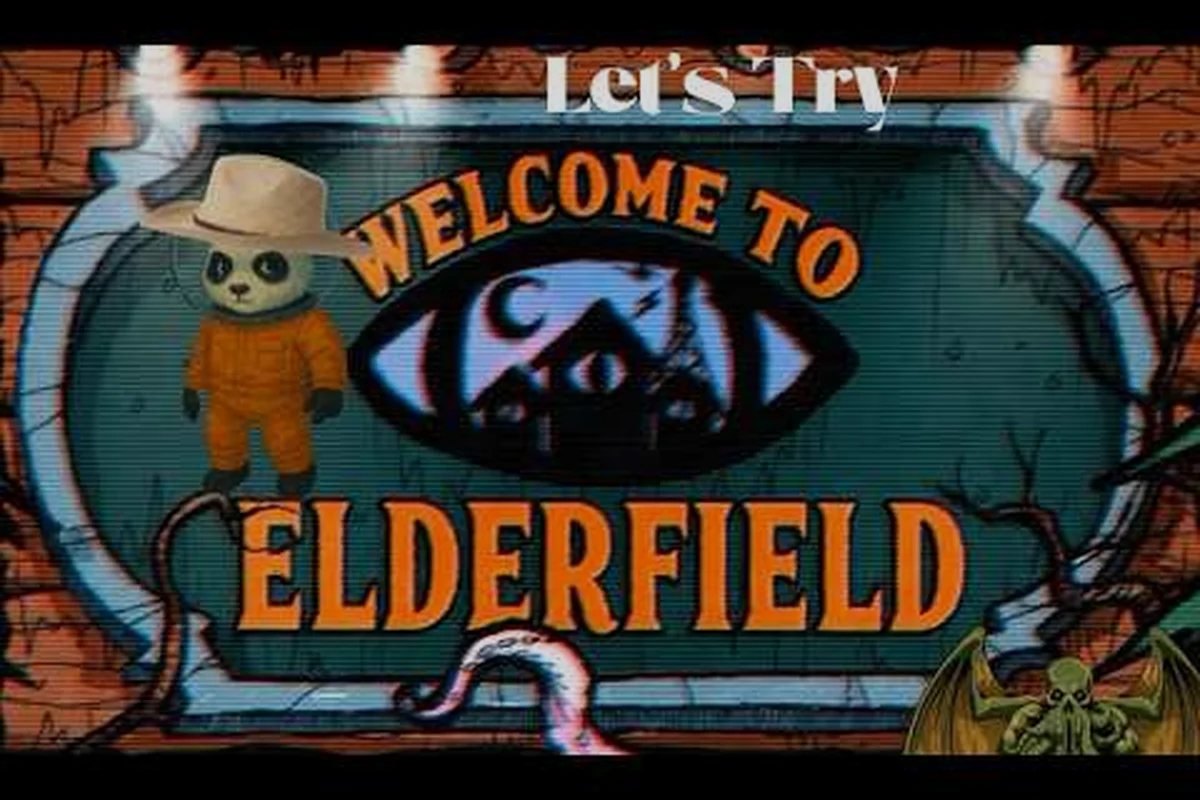
The Welcome to Elderfield slumbering entities are the dormant forces sealed beneath the valley, and every choice you make on the farm pulls back another layer of the dark secrets hiding in plain sight. If you have ever gone to bed in a cozy farming sim and woken up gasping, this is the story your character can never quite escape. The town of Elderfield looks like a postcard, but its founding of Elderfield is tangled up with a covenant nobody alive remembers signing.
Welcome to Elderfield sits in an awkward, brilliant little niche where Stardew-style farming routines brush shoulders with creeping psychological horror, and the slumbering entities are the reason the routine never quite feels safe. According to the Welcome to Elderfield Steam store page, the game invites you to "unravel the dark mythology of Elderfield, the history of its colonial settlers, and the ancient slumbering entities sealed beneath the valley" — and what follows is everything community digging has pulled out of that mythology so far.
The Founding of Elderfield and the Original Covenant
Elderfield's origin story is a love letter to gothic Americana with a horror undercurrent. The founding of Elderfield dates back to a wave of colonial settlers in the 1700s who pushed into a valley that was, by all local accounts, already claimed. According to community data gathered from in-game documents, the settlers did not fight the valley's previous occupants — they bargained with them. That bargain is the original covenant, and the Welcome to Elderfield town history is essentially a long footnote to the moment it was signed.
The Founders and the Valley Pact
The valley pact is referenced across newspaper scraps, library ledgers, and a partially burned parish register. The pact promised the settlers fertile land and a defensible valley in exchange for one thing: never let the seal break. The Welcome to Elderfield founding of Elderfield records describe the founders as pragmatic, exhausted people, not occultists, which is part of why the covenant is so chilling. They were farmers. They made a farming deal with something older than farming.
| Founder Figure | Role in the Pact | Modern Echo in Game |
|---|---|---|
| Mayor Ellsworth (fictional, in-game) | Served as witness and signatory | Recurs as a recurring name on town signage |
| The Cartographer | Mapped the seal's perimeter | His original maps appear as fragments in the archive |
| Sister Maren | Kept the parish record | Referenced in church basement journals |
| The Drifter | Outsider who brokered the deal | Echoes in a stranger NPC who appears at the edge of town |
What the Covenant Actually Contains
The covenant's terms are not spelled out in any single document — players piece them together from fragments. What is clear is that the seal is tied to a cyclical sleep, and breaking it would require either deliberate ritual or catastrophic neglect. That is where the Welcome to Elderfield supernatural anomalies start. The town has spent two centuries slowly forgetting the bargain, which means the seal is being slowly, accidentally honored through inertia. The game's horror rises from the question of what happens when that inertia fails.
The Slumbering Entities Themselves
The Welcome to Elderfield slumbering entities are not one monster — they are a category. Think of them less as a single Old God and more as a geology of presences pressed into the bedrock, each sealed in its own pocket of the valley. The game names only a handful directly, but the framing implies an entire buried hierarchy.
Named and Implied Entities
| Entity | Type | First Sign Appears In | Role in the Cycle |
|---|---|---|---|
| Moss Canny | Boundary warden | Bog perimeter | Patrols the seal's edge |
| Mr. Nightmare | Dream emissary | Sleep paralysis visions | Tests sleepers in the nightmare realm |
| The Hollow Choir | Collective voice | Radio static, distorted hymns | Speaks through the town's broadcast equipment |
| The Old Gods | Apex presences | Late-game ritual sites | The entities the entire pact was built to keep asleep |
| The Unnamed Below | Implied | Cave system and well shafts | Older, deeper, never directly described |
The named entities function almost like layers of a dream. The Old Gods are the apex, Mr. Nightmare is the courier, the Hollow Choir is the static in the airwaves, and Moss Canny is the watchdog who makes sure nobody wanders too far past the bog after dark. Each layer rhymes with the others, which is part of why the lore feels so cohesive. For a deeper mechanical breakdown of Mr. Nightmare specifically, the boss guide to Welcome to Elderfield is the most relevant combat-facing reference.
Symbolism and Visual Language
The entities are drawn in a hand-illustrated manga horror style that is closer to Junji Ito than to standard indie pixel art. Their visual signatures include too-long limbs, faces with sealed mouths, and eye motifs that show up on both the seal markings and the town's official seal. The Welcome to Elderfield dark secrets rarely announce themselves with a jump scare; they sit in the corner of a frame you almost missed and wait for you to look back.
Sleep, Death, and the Nightmare Realm
The nightmare realm is the connective tissue between the dream and the seal. Every time the protagonist goes to bed, the game rolls a die against their stamina, mental state, and any active curse items they have picked up. If the die lands badly, the protagonist does not just dream — they get extracted into the nightmare realm, where the dying in sleep meaning becomes literal.
What "Dying in Sleep" Actually Means
The Welcome to Elderfield dying in sleep meaning has sparked extensive debate on the Welcome to Elderfield Steam community discussions, where the town history of Elderfield and its founding-era supernatural anomalies fuel competing interpretations. The community consensus breaks it into three layered readings:
-
Mechanical reading: Sleep is a hard resource gate. Going to bed with too little stamina or in a cursed location can kill the player outright and send them back to a checkpoint.
-
Narrative reading: Death in sleep is a failed audit by Mr. Nightmare. The player character was tested, and the test broke them.
-
Lore reading: Sleep in Elderfield is never private. The nightmare realm is co-shared, and "dying" there means the seal has been touched. The body wakes up, but the seal remembers.
The Nightmare Realm as a Location
The nightmare realm is not a single map — it is a re-skinned version of the overworld rendered in negative colors, with buildings that look right but are subtly wrong. Doors open into the wrong rooms, NPCs appear in places they should not be, and the radio is always on. The music, composed by Dated as a dark lofi soundtrack of melancholy piano, dusty vinyl crackle, and haunting synths, is what tips you off before your eyes do, because the nightmare realm's theme drops half a step.
| Surface Clue | Waking World | Nightmare Realm |
|---|---|---|
| Town square fountain | Clean water, sunny reflection | Black water, inverted reflection of the sky |
| Mayor's office | Normal furniture, normal NPC | Furniture rotated 90°, NPC standing silently in the corner |
| Farm plot | Crops, soil, your scarecrow | Same scarecrow, but it turns to watch you when you pass |
| Radio | Weather and civic notices | The Hollow Choir chanting in your mother's voice |
Supernatural Anomalies in Daylight
The Welcome to Elderfield supernatural anomalies are not restricted to dream sequences. The game seeds the waking world with small, almost deniable wrongness, and that is what makes the lore feel earned rather than scripted. You have to be paying attention, and the game never breaks the cozy frame to remind you to pay attention.
Categories of Anomalies
| Anomaly Type | Where It Appears | What It Signals |
|---|---|---|
| Radio drift | Civic broadcasts after midnight | The Hollow Choir is closer to the surface |
| Missing NPCs | Town center at specific in-game times | A test is being staged |
| Rotated furniture | Player's own house after certain choices | The protagonist was sleepwalking again |
| Bulletin board blackouts | Civic duty postings | The town's administrative layer is glitching |
| Crop whispers | The farm at night | The seal is reacting to a recent ritual |
For the practical side of how bulletin board requests and radio broadcasts feed into the same civic-versus-occult tension that defines the slumbering entities, the Welcome to Elderfield civic duties guide pairs naturally with this section. There you can see how a single unlogged flyer left on a Tuesday — say, the "Furnace Needs Sweeping" notice from the town hall — can quietly bleed into the late-night broadcast log, where the same address surfaces as a muffled cry between weather reports. That overlap is exactly where the nightmare realm begins pulling at otherwise mundane civic life, and the guide walks through the exact request types (errand postings, missing-person notices, repair slips) most likely to be repurposed by entities that feed on forgotten obligations.
Reading Anomalies in Sequence
The anomalies are not random. Community data suggests they trigger on a hidden counter that ticks up when you perform a covenant-relevant action: sleeping in a cursed bed, planting a crop in a desecrated plot, accepting a town request that funnels resources to a specific NPC. The counter is what eventually unlocks the nightmare realm encounters, and the Welcome to Elderfield exploration guide is the most useful external reference for figuring out which map nodes contribute to it.
The Dark Secrets of the Town
The Welcome to Elderfield dark secrets layer across four social circles: the town council, the church basement, the library archive, and the player's own bloodline. Each circle trades one piece of the puzzle for a different kind of cost.
The Four Circles of Hidden Knowledge
| Circle | Keeper | Cost of Knowing |
|---|---|---|
| Town Council | Mayor and senior clerks | Political compromise, silenced questions |
| Church Basement | Sister Maren's successor | Faith, ritual participation |
| Library Archive | Reclusive archivist NPC | Time, sleep, sanity |
| Player Bloodline | Protagonist's inherited journal | Memory, family, identity |
The protagonist's family journal is the linchpin. It is hand-drawn, half-illegible, and written by a relative who understood the covenant better than anyone in the current generation. The journal never explains the seal directly; it describes symptoms. You have to assemble the cause yourself, which is part of why the lore reads more like a found-footage mystery than a wiki dump.
What the Endings Imply
The Welcome to Elderfield dark secrets branch into multiple endings because the game is, mechanically, a mystery you solve by your choices, with each decision tree reshaping which slumbering entities you encounter and whether the nightmare realm consumes the protagonist. Community theory crafting on the Steam discussion board groups the endings into three broad arcs: a "Redemption" path where the player purges the dying-in-sleep curse from Elderfield's founding lineage, a "Corruption" route that surrenders to the supernatural anomalies bleeding through from the dream plane, and a "Vanishing" resolution in which the player character simply ceases to exist from the town's history, mirroring the real-world disappearance of the 1847 settlers.
-
Salvation arc: You honor the covenant, shore up the seal, and the town survives another century in uneasy stasis.
-
Awakening arc: You break the seal knowingly. The Old Gods rise. The town is changed, but not destroyed.
-
Erasure arc: You refuse every ritual, ignore every anomaly, and the town simply forgets you. The protagonist is quietly unmade by a valley that has decided they do not matter.
The endings are not framed as good-versus-evil. They are framed as three different answers to the same question: what do you owe a place that made a deal without asking you? Each conclusion — whether you sever the slumbering entities' hold, bargain with the nightmare realm, or vanish into the dying-in-sleep loop that locals whisper about — reframes the town's founding pact as a personal ledger rather than a moral verdict, and the supernatural anomalies you triggered along the way are recorded as debt, not sin.
Dying, Sleeping, and the Meaning of "Do Not Wake Them"
The Welcome to Elderfield dying in sleep meaning connects back to the covenant in a way that reframes the entire game. The original founders promised the valley's previous occupants a long, undisturbed sleep. The townspeople have been keeping that promise, unwittingly, for centuries. Every bed in Elderfield is a kind of vigil.
Why Sleep Is the Core Mechanic
Sleep is the only state in the game where the protagonist is genuinely vulnerable and genuinely non-private. The nightmare realm exploits that, and the entities exploit that, and the town exploits that. The Welcome to Elderfield nightmare realm is, in lore terms, the seal's immune system — a fever dream the valley runs to check who is paying attention.
| Player Action | Effect on the Seal | Hidden Counter Change |
|---|---|---|
| Sleeping in a blessed bed | Honors covenant, +stability | -1 to -2 |
| Sleeping in a cursed bed | Tests seal integrity | +1 to +3 |
| Refusing to sleep | Draws Mr. Nightmare's attention | +2 |
| Completing a ritual cleansing | Explicitly reinforces the seal | -3 |
| Ignoring an anomaly | Seal degrades passively | +1 per in-game day |
For more on the practical combat side of what happens when the seal degrades far enough — including how the tentacle boss encounter ties into the nightmare realm — the Welcome to Elderfield tentacle boss breakdown is the most relevant cross-reference.
The "Dying in Sleep" Warning as Civic Myth
Elderfield has a saying — never quite spoken aloud, always phrased as an old wives' tale — that the people who die in their sleep in this town are not really dying. They are being audited. Community data suggests the saying predates the player character's arrival by several generations, which means the town has been trying to warn its children about the seal for longer than anyone can remember, and the warning has been steadily wearing down into folk wisdom.
Frequently Asked Questions
What are the slumbering entities in Welcome to Elderfield?
The Welcome to Elderfield slumbering entities are a hierarchy of ancient presences sealed beneath the valley by a covenant the colonial founders signed in the 1700s. The named ones — Moss Canny, Mr. Nightmare, the Hollow Choir, and the Old Gods — act as wardens, couriers, voices, and apex presences respectively, all serving the same buried hierarchy.
Is the founding of Elderfield based on a real historical event?
No, the founding of Elderfield is a fictional in-game backstory inspired by gothic Americana and colonial gothic horror tropes. It draws on real covenant-and-pact folklore but does not reference any specific real settlement, which keeps the lore grounded in the game's own internal mythology.
What does dying in sleep mean in the game?
The Welcome to Elderfield dying in sleep meaning is layered: mechanically, it is a stamina-gated failure state; narratively, it represents a failed test by Mr. Nightmare in the nightmare realm; and lore-wise, it means the protagonist's sleep was used to probe the seal. Waking up is not the same as surviving.
Where does the nightmare realm fit into the lore?
The nightmare realm is the seal's immune response, a shared dream layer that the entities use to test, warn, and occasionally recruit sleepers. It mirrors the overworld in negative colors and is accessed whenever the protagonist sleeps at a cursed bed or after a covenant-relevant choice.
Are the supernatural anomalies random or scripted?
According to community data, the anomalies are not random. They trigger on a hidden counter that increases when the player performs covenant-relevant actions, such as sleeping in a cursed bed, planting in a desecrated plot, or ignoring civic warnings, and the counter is what eventually unlocks the deeper nightmare realm encounters.